
BIM for Heritage
Digitize historic buildings without losing any details
We capture historic buildings and heritage sites with the precision that their restoration requires.
We deliver the HBIM model that architects and conservation technicians need.

Why restoration projects need specialized heritage BIM
The original plans are from a time when they were not measured with sufficient precision.
Each intervention requires knowing exactly what there is: the thickness of a wall, the geometry of a vault.
Administrations require high-precision technical documentation to authorize interventions.
An intervention project in a historic building cannot afford documentation errors.
When plans do not reflect the reality of the building —and in heritage they almost never do so with sufficient precision— each project decision is made on an uncertain basis. And the consequences of that uncertainty come to work: elements that do not fit, costs that skyrocket, deadlines that are not met.
The BIM methodology for heritage changes that scenario. The documentation is based on a high-precision laser scan that captures the real geometry of the building, without physical contact and without altering it. From this base, the HBIM model includes each construction element with its geometry, its materials and its state of conservation. It is the information that restoration architects, heritage organizations and construction teams need to work safely.
How we apply the BIM methodology in heritage projects
We capture the complete geometry with a high-precision laser scanner.
*We model in HBIM respecting the terminology* and levels of detail of conservation architecture.
The process begins with the complete laser scan of the historic building. Depending on the geometric complexity and the level of detail required, we use high-resolution ground scanners, which best capture the irregularities of historic architecture: ashlar walls, cross vaults, plasterwork and ornamental elements.
With that basis we built the HBIM (Historic Building Information Modeling) model, which does not work with the standard construction elements of conventional BIM but with free geometries that reflect what really exists. The model includes the state of conservation parameters and the technical data that architects need for the restoration project and for the documentation required by the competent administration in each autonomous community.

Services that we usually provide in this sector
Do you want to see how we have applied it?
Here you have a selection of the latest projects created by us. In each one you can see the client's challenge, the technology we apply and the specific result.
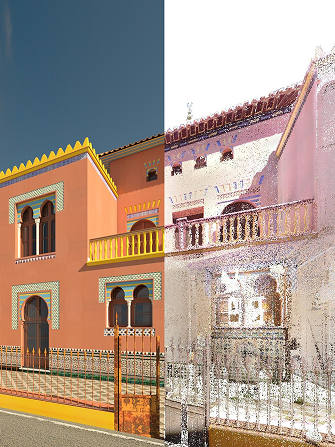
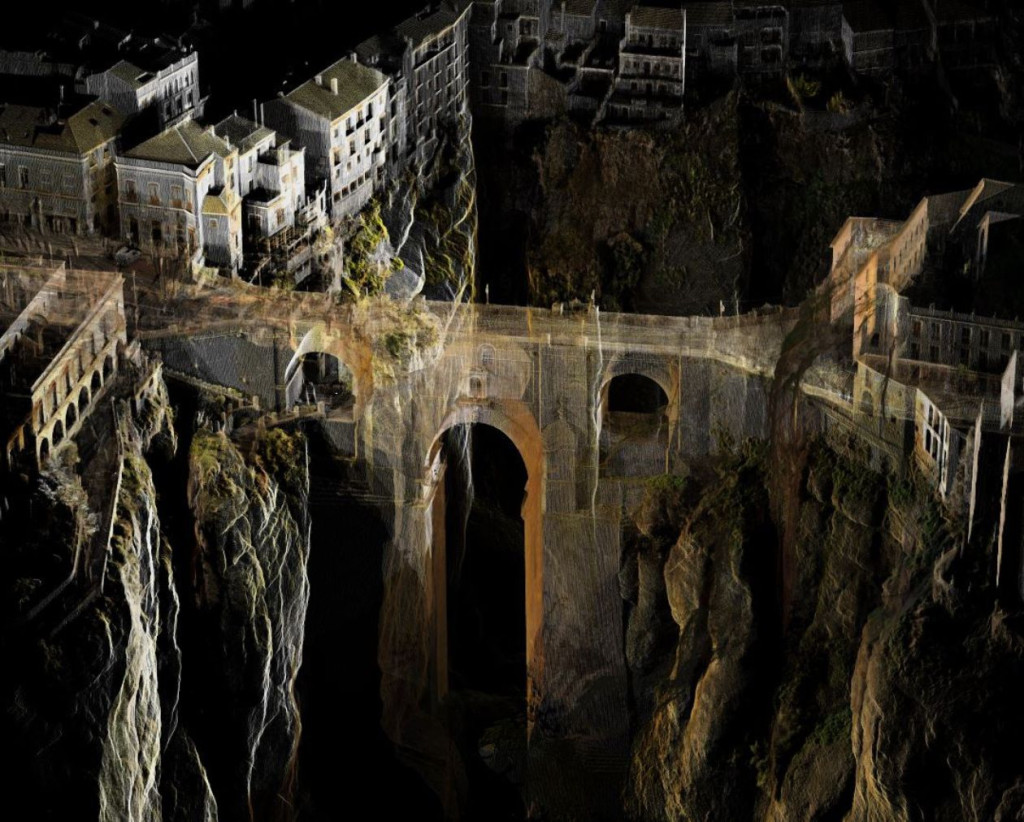
HBIM for historic buildings: technical documentation without damaging the structure
The HBIM (Historic Building Information Modeling) is the *application of the BIM methodology to historical buildings, monuments and heritage complexes*. The *difference with conventional BIM* is in the level of geometric detail and specific terminology that conservation architecture requires.
Laser scanning captures every curve, every irregularity and every construction element without physical contact with the structure. That is especially important in historic buildings: data collection cannot compromise the integrity of the protected asset.
The result is an HBIM model that architects and restoration technicians can use directly to design interventions, request authorizations from heritage administrations or document the current state before any action.
Frequently asked questions
HBIM stands for Historic Building Information Modeling. It is the application of the BIM methodology to historic buildings, with the necessary adaptations to work with irregular geometries, traditional materials and the specific terminology of conservation architecture.
Unlike conventional BIM —which works with standardized construction elements—, HBIM models each element as it is: walls with irregularities, vaults with free geometry, unique ornamental elements. The result reflects the reality of the historic building with the precision that any restoration intervention requires.
No. Laser scanning is completely non-invasive: there is no physical contact with the structure or any element of the building. The equipment emits pulses of laser light that bounce off surfaces and record their position in space. The building does not receive any intervention.
This is especially important in protected buildings where any intervention requires authorization from the heritage administration. The scan can be performed without any special authorization beyond that of the owner to access the property.
The HBIM model and the graphic documentation that we generate —current state plans, orthophotographs, elevations and sections— meet the technical requirements demanded by heritage administrations to authorize interventions in protected assets.
In each autonomous community the specific requirements may vary. If you already have an authorization file in place, share with us the requirements of the competent body and we will adapt the documentation to what they request.
Yeah. We are based in Granada but we carry out heritage projects throughout Spain. What changes depending on the autonomous community are the competent administrations and the specific requirements of each type of protected asset.
For projects in the Irish market we work with local teams. In Ireland there is a significant volume of historic buildings and the HBIM has an increasing presence in built heritage conservation projects.
Do you have a historic building that you need to document?
Tell us what building it is and what the objective of the project is.
